

“Everyone thinks they have the best dog. And everyone is right ♥”
Service Dogs, Therapy Dogs, Emotional Support Dogs:
Service Dogs in Ontario:
- trained to perform specific tasks, such as (but not limited to): guiding a visually impaired handler, diabetes blood sugar alert, protecting and alerting a handler with epilepsy, retrieving out of reach objects for a hander with a physical disability, alerting a handler who is deaf about sounds, calming a handler with autism who is in an environment with excessive sensory stimulation, blocking or deep pressure therapy for a handler with a psychiatric disorder
- it is the law that all service providers operating premises open to the public must allow service dogs to enter and remain with their handlers. There are a few cases where service animals are not legally permitted, but in these instances service providers much offer alternative accommodations for the handler/customer.
- Identification: if it is not visually apparent that the customer requires the animal for reasons related to a disability, the handler should have an identification of the card or letter from a healthcare practitioner, confirming the requirement of the service dog’s assistance.
- For complete information, please visit the Accessibility for Ontarians with Disabilities Act (AODA) site.
Purchasing Service Pup Prospects at Glenannon Station Golden Retrievers:
- in order to purchase a pup from us with the intention of being trained as a service dog, we require the handler to be connected with a trainer at time of purchase.
- beware, there are unethical, inexperienced, un/underqualified persons posing as service dog trainers. We will refer you to a qualified, reputable trainer for your service training needs.
- sadly, there are illegitimate service dog teams who falsely portray themselves. It is unethical to purchase a “service dog” vest for any dog to wear, in order to gain public access privileges.
- average age of when a service dog begins working is 18-24 months of age. When a pup is purchased to be trained for service, there is never a guarantee that the pup will pass the requirements. It will take up to 18 months of age or more before you will know if the pup can perform the skills and be happy doing the job.
- in order to graduate as a Service Dog Team, a Public Access Test needs be performed by the prospective team by a legitimate evaluator
- there is NO OFFICIAL SERVICE DOG CERTIFICATION IN ONTARIO.
- For more information, please see the Canadian Association of Professional Service Dog Trainers website
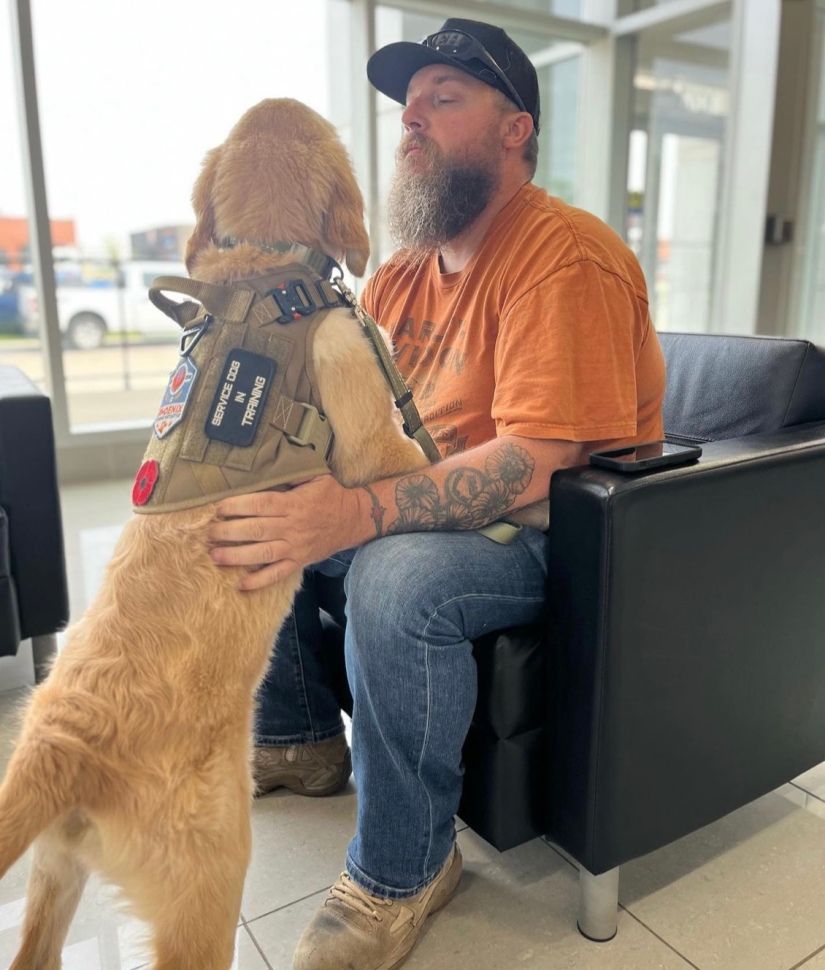
Wilson and Greg are a PTSD Service Team in Training. 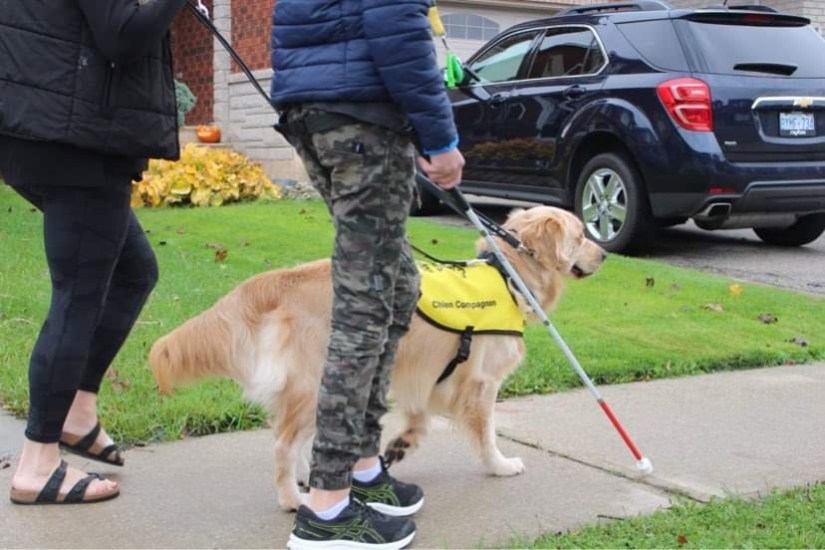
Felix and his hander Joshua are a CNIB Buddy Dog Team. 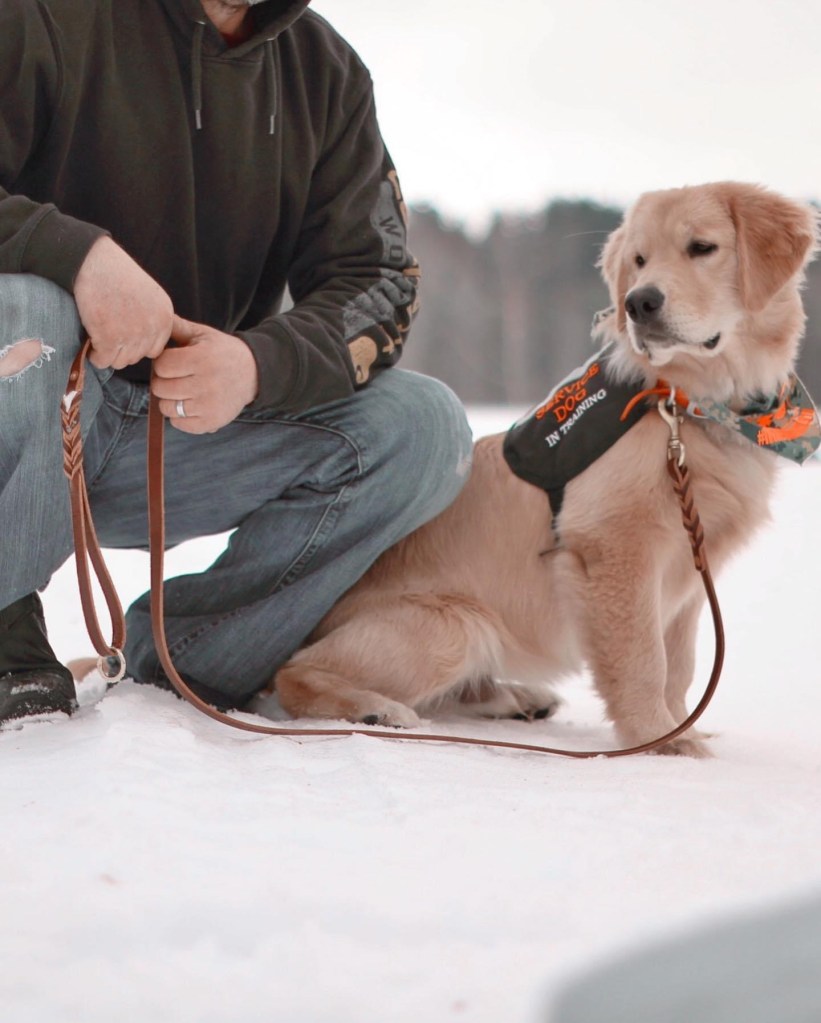
Hardy, a PTSD Service pup in training 
We value our relationship with the CNIB 
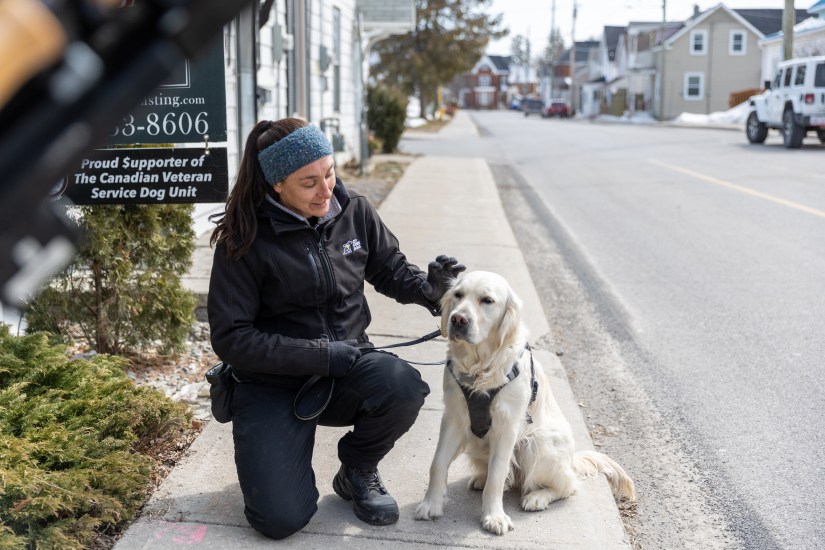
Amy is a CNIB guide dog in-training 
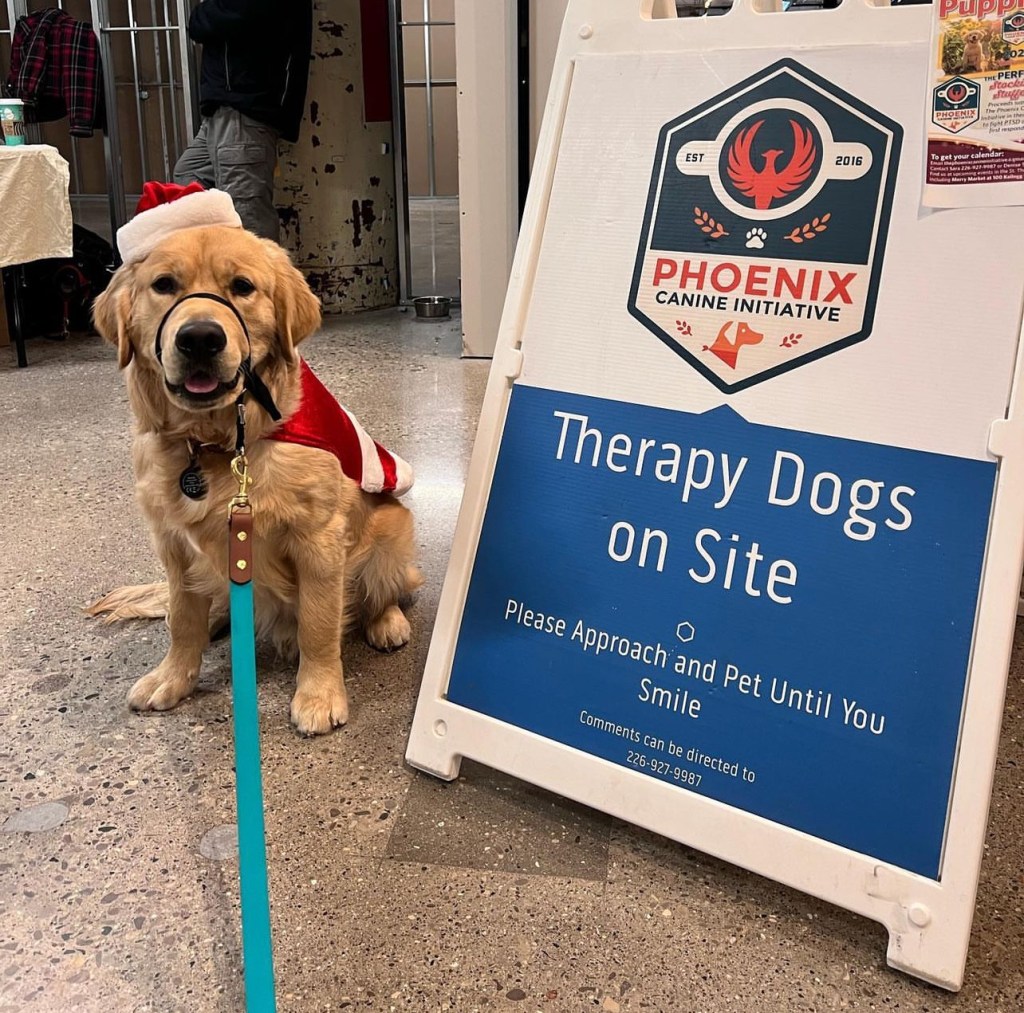
The Phoenix Canine Initiative and #IVEGOTYOURBACK911 utilize Glenannon pups as PTSD Service Dogs in training and their Therapy Dog visiting programs. 
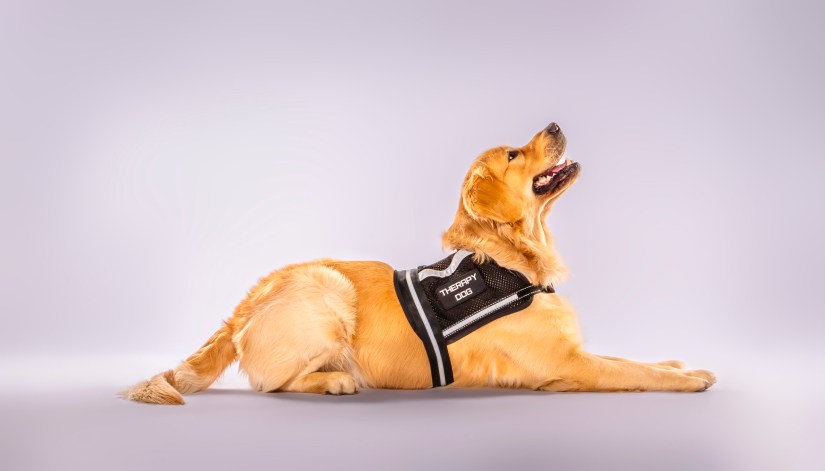
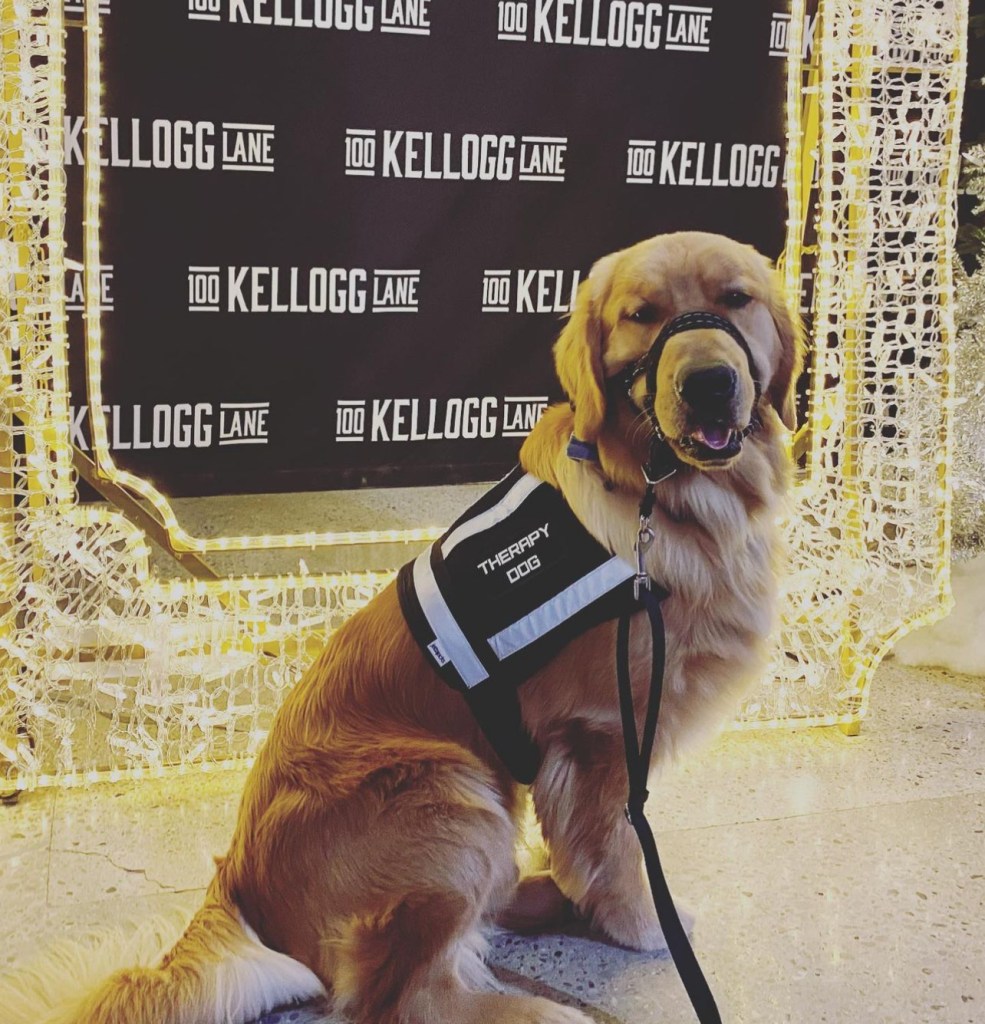
Therapy Dogs:
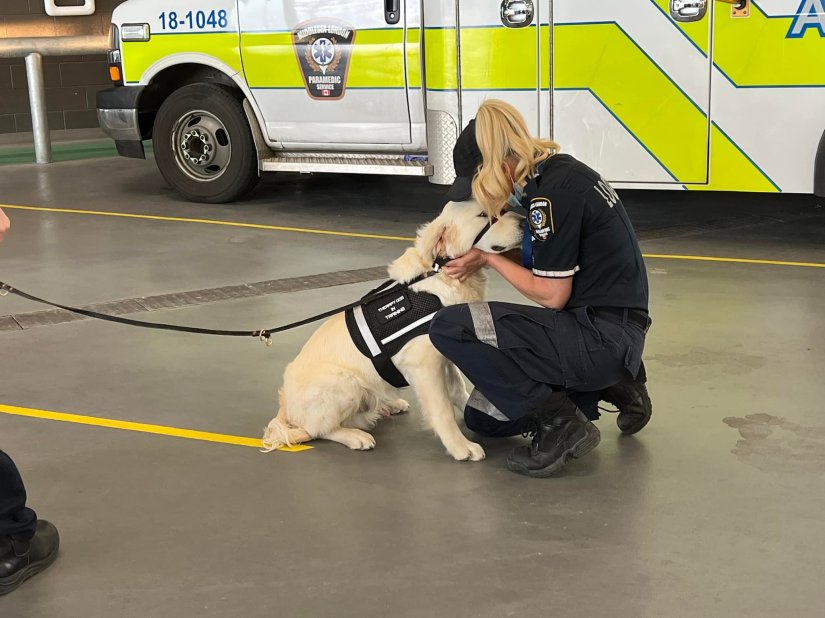
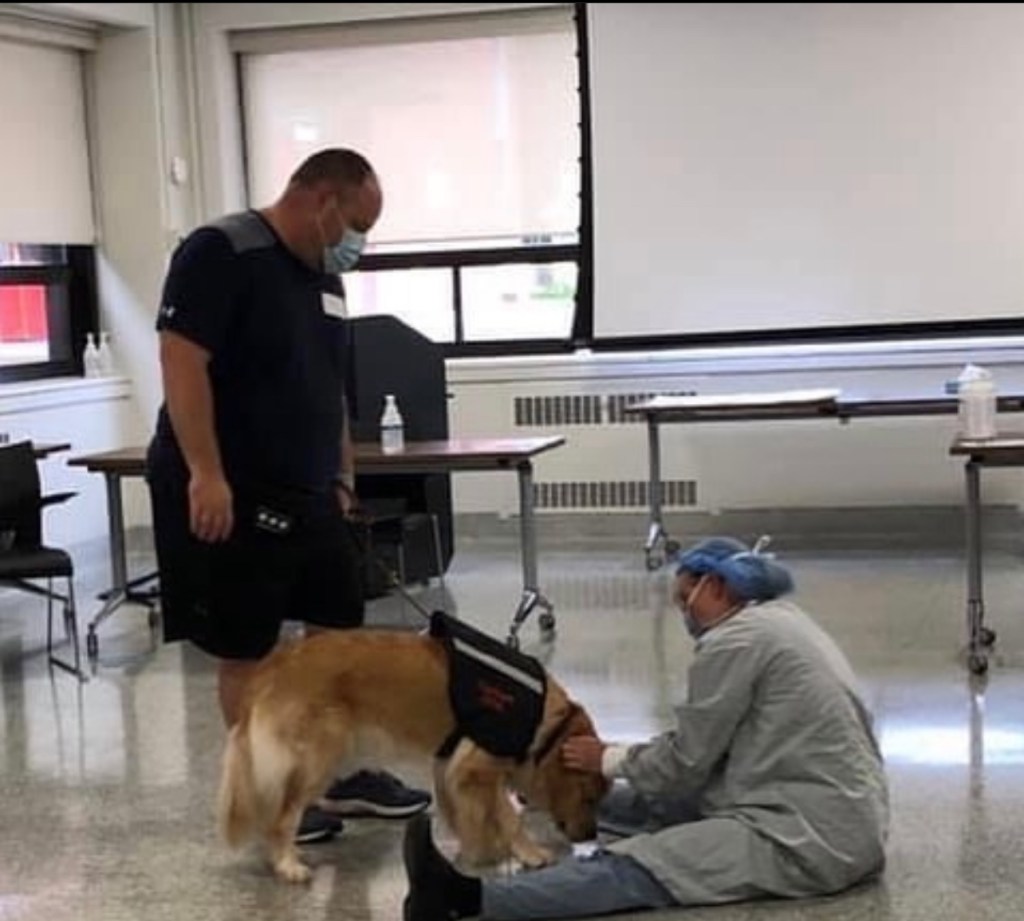
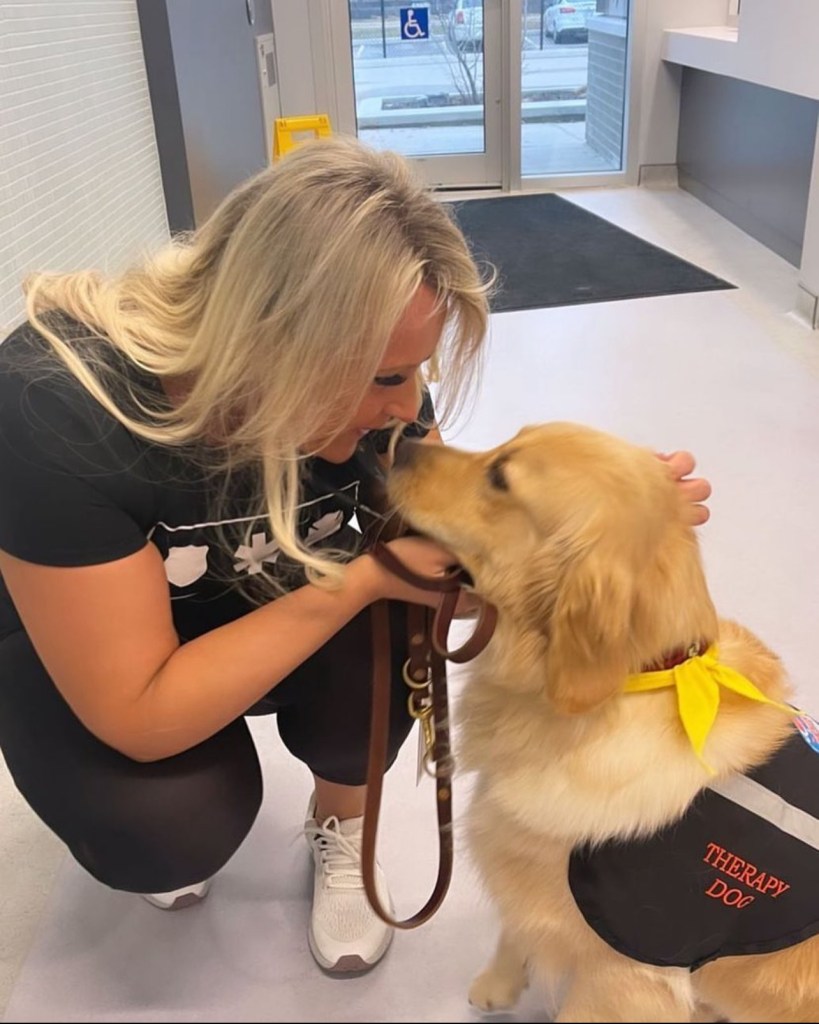
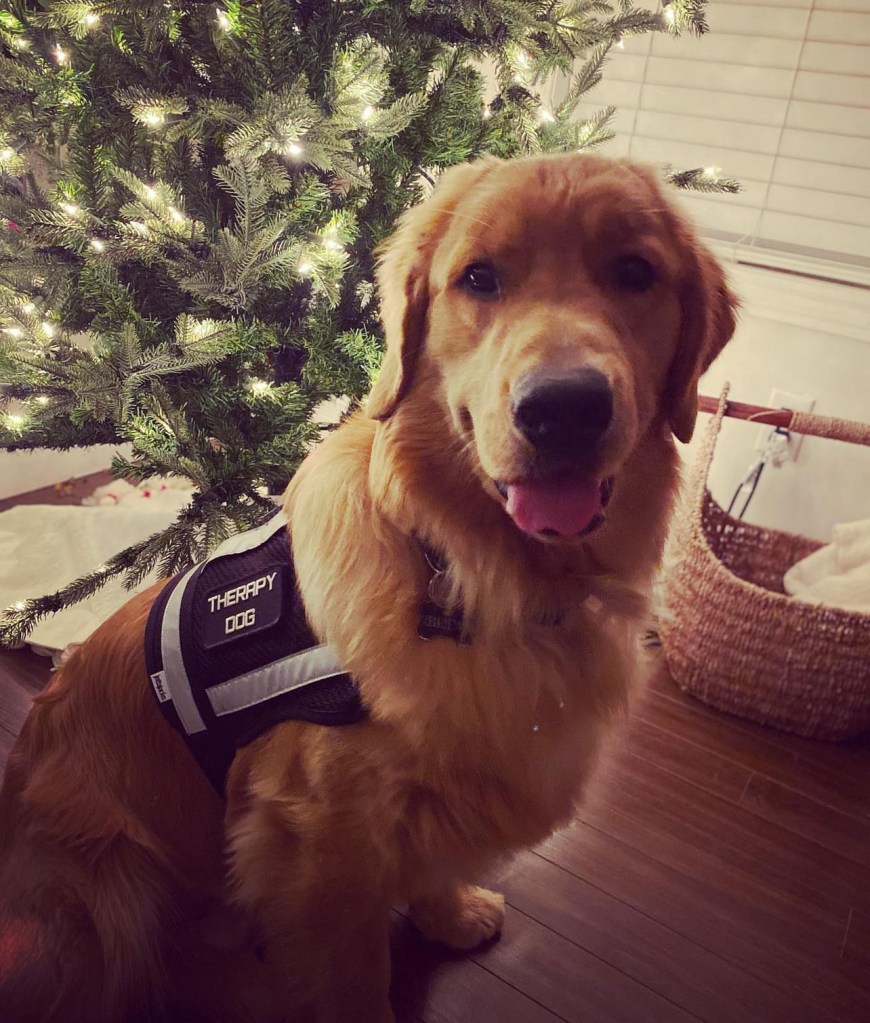
Therapy Dogs visit senior’s homes, hospitals, airports, schools, and front line community workers such as paramedics, police and firefighters. The list continues to grow as dogs are increasingly being recognized for their abilities to reduce stress and boost over-all feelings of wellness.
While they have an extremely important role, Therapy Dogs have many more restrictions than Service Dogs, due to having a different purpose and training requirements. Therapy dogs provide opportunities for the individuals they visit to:
- talk with the handler & dog
- feel, touch, pet and cuddle the dog
- receive unconditional love from the dog
- carry out or practice an activity in the prescence of the dog.
Therapy Dogs DO NOT have permission to be in attendance everywhere their handler goes.
Therapy Dogs and their handlers are usually required to show proof of training before they are permitted to take on a Therapy Visit Role. Examples of approved Therapy Dog Organizations within Canada include (but are not limited to) St. John Ambulance Therapy Dogs, The Phoenix Canine Initiative, Pet Partners, Therapeutic Paws of Canada, and Pacific Animal Therapy Society

Emotional Support Dogs:
“All dogs are emotional support animals”.
An emotional support dog is a pet dog. Companion, best friend, keeper of secrets, family member, stealer of your couch, the reason you vacuum daily. Emotional support dogs do not have the ability to go everywhere with their owner and must adhere to rules that individuals and businesses have for their presence.
It is fraudulent to mispresent a pet or emotional support dog to be a service or therapy dog.
 Glenannon Station Golden Retrievers